
Why ‘Terminator-Style’ Robots Are Still a Distant Dream – The Hard Truth About AI, Energy, and Robotics
By Sergio Durante and Tesla Feynman
“The Myth of the Humanoid Revolution: Why We’re Still Far from ‘Real’ Terminators”
The Dream vs. Reality of Humanoid Robots
For decades, Hollywood has fueled the idea that humanoid robots—capable of independent thought, superhuman agility, and boundless energy—are just around the corner. The truth? We are still light-years away from anything remotely resembling a real-life Terminator. Despite massive advancements in artificial intelligence, robotics, and automation, there are fundamental barriers preventing humanoid robots from widespread adoption.
Among the most critical? Energy limitations, intelligence bottlenecks, and mechanical inefficiencies.
1. Energy: The Ultimate Achilles’ Heel of Humanoid Robots
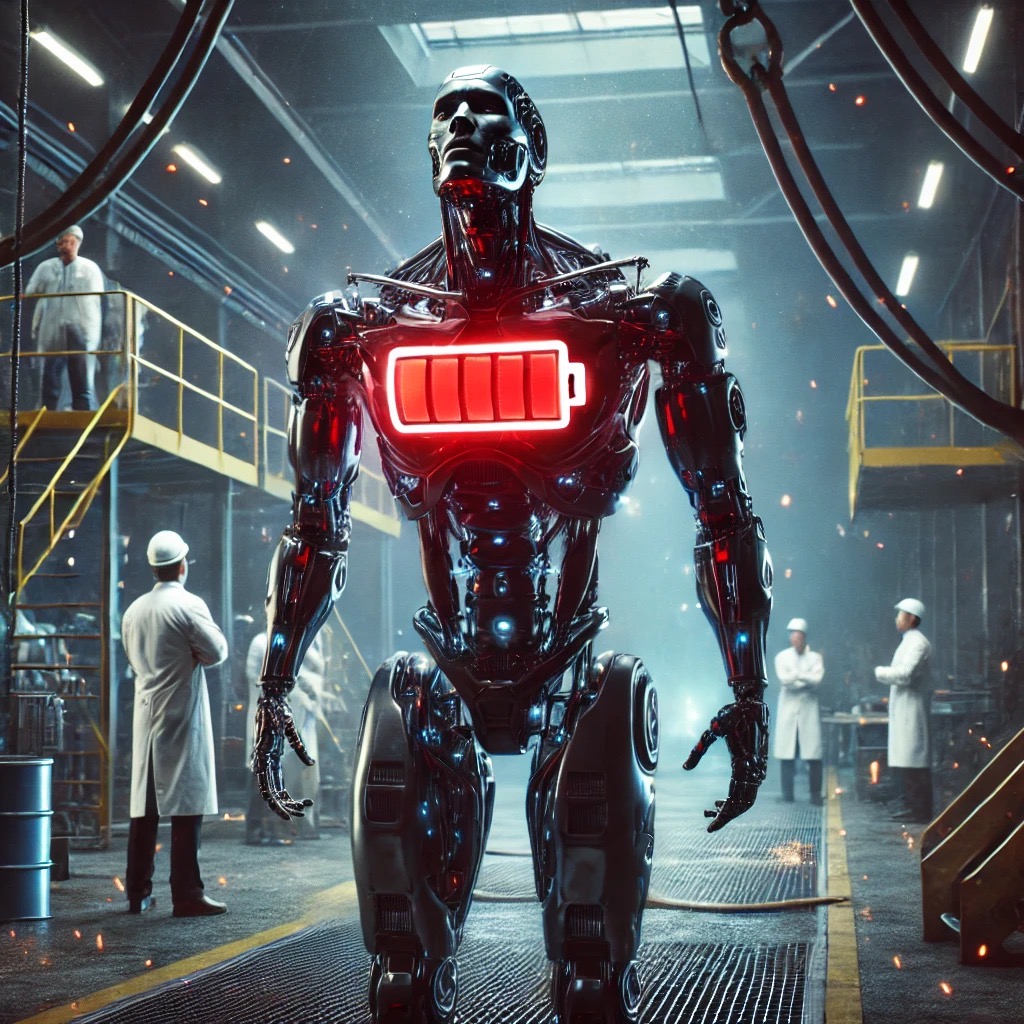
The biggest challenge preventing humanoid robots from achieving mainstream adoption is power supply and battery limitations. While modern robots can perform impressive stunts (like Boston Dynamics’ Atlas doing parkour), these performances are short-lived and power-hungry.
Why Batteries Are a Huge Problem
•Low energy density: Today’s best lithium-ion batteries don’t hold enough power for prolonged, high-intensity tasks.
•Weight vs. capacity trade-off: More battery capacity means heavier robots, reducing agility and increasing power consumption.
•Charging constraints: Even with rapid charging technologies, a humanoid robot would need frequent downtime just to refuel.
🚀 The reality: A humanoid robot performing labor-intensive tasks for hours on end without interruption is currently impossible with our best battery technology.
Potential Solutions
•Solid-state batteries for higher energy density.
•Energy harvesting from movement or environmental sources.
•Swappable battery packs to reduce downtime.
•Wireless charging hubs to keep robots operational.
But even these solutions are years away from practical, scalable application.
2. The AI Illusion: Why Robots Aren’t Really “Thinking” Yet
Despite major progress in machine learning, natural language processing, and computer vision, robots still struggle in real-world adaptability. Unlike in movies, where AI-driven humanoids display human-like reasoning, today’s best AI systems are still specialized problem-solvers, not general thinkers.
The Gaps in AI Capabilities for Humanoid Robots
•Limited adaptability: AI excels in controlled environments but fails in unpredictable, real-world scenarios.
•High computational costs: Real-time decision-making requires enormous processing power.
•Lack of intuitive learning: Unlike humans, robots don’t generalize knowledge well—they need enormous datasets and explicit programming.
🚀 The reality: A humanoid robot capable of autonomous, unsupervised learning and decision-making is far from achievable with today’s AI architectures.
3. Mechanical and Cost Barriers: Too Expensive, Too Fragile
Even if we solve energy and AI challenges, cost and durability remain major hurdles.
Why Humanoid Robots Are Not Yet Economically Viable
•Complexity = High Costs: Humanoid robots require sophisticated actuators, sensors, and materials, making them extremely expensive to build and maintain.
•Maintenance issues: Unlike industrial robots, humanoid robots have many points of failure, requiring constant fine-tuning and repair.
•Alternatives are better: Why use an expensive humanoid when simpler robots (AMRs, robotic arms) can perform the same tasks more efficiently?
🚀 The reality: Until costs drop dramatically and durability improves, humanoid robots will remain a niche product rather than a widespread technology.
Conclusion: What’s Next for Humanoid Robots?
Despite these challenges, the race to develop functional humanoid robots continues. Companies like Tesla, Boston Dynamics, and Figure AI are pushing the limits, but mass adoption is still a decade (or more) away.
🔹 Short-term focus: Expect continued success in simpler robotic systems like robotic arms, exoskeletons, and autonomous delivery bots.
🔹 Long-term potential: Advancements in energy storage, AI generalization, and mechanical efficiency could bring humanoid robots closer to reality.
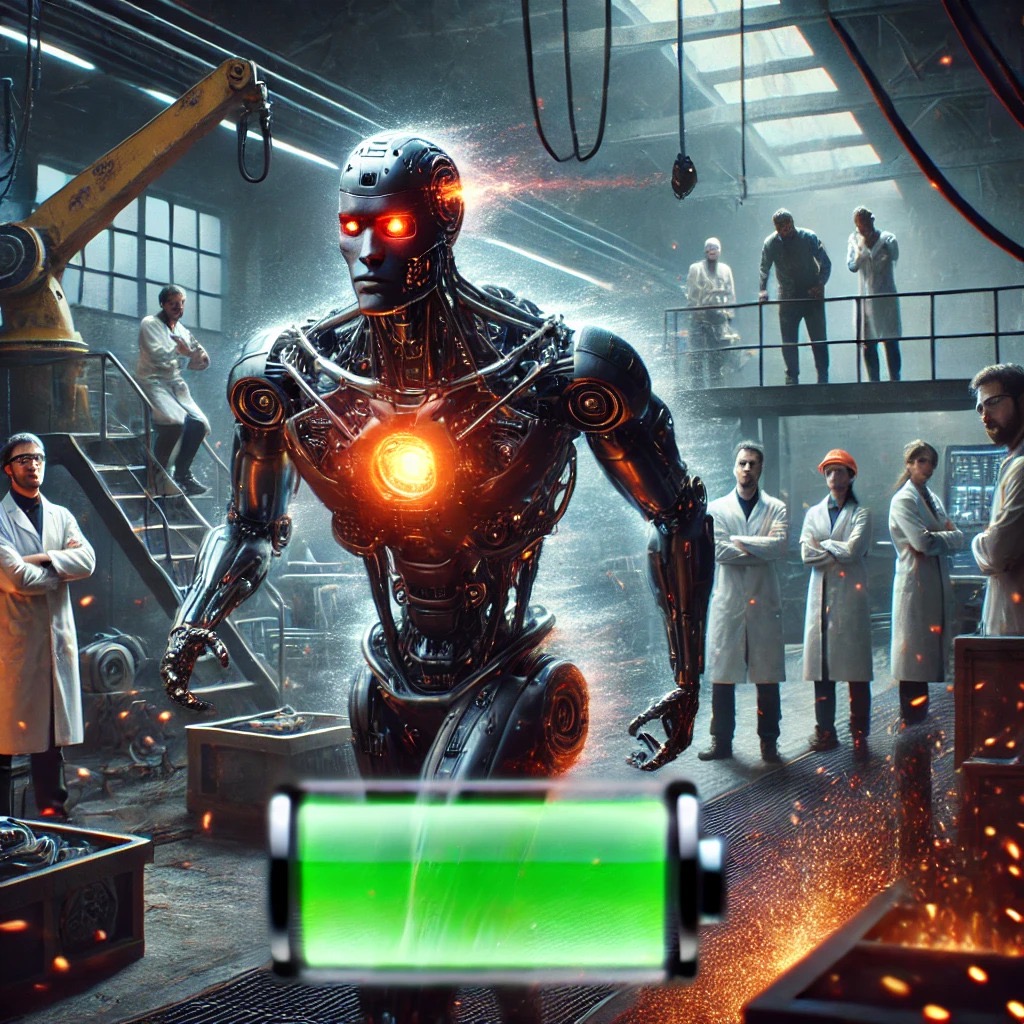
🔹 Ultimate game-changer: A new energy breakthrough (like nuclear micro-reactors or bio-inspired power cells) could be the real inflection point.
For now, true Terminator-style humanoid robots remain a sci-fi dream—but one worth chasing.
#HumanoidRobots #AIPoweredRobotics #FutureOfRobotics #RobotAutonomy #BatteryTechnologyForRobots #TerminatorStyleRobots #ChallengesInRobotics #EnergyLimitationsInRobots #AdvancedAIAndRobotics #NextGenerationRobots #ArtificialIntelligenceInRobotics #WhyRobotsAreNotLikeTerminator #IndustrialRobotsVsHumanoidRobots #BatteryLifeInAIRobots #AIPoweredAutomation #MechanicalChallengesInRobotics #EnergyEfficientRobots #AILimitationsInRealWorldRobots #TheFutureOfHumanoidMachines #CyberneticOrganismsAndRealAI