
LAST NEWS
By Sergio Durante


Involuntary Luxury – When the Real Starts to Look Fake… and How to Reclaim the Truth
The paradox of modern luxury: when even the most authentic object is indistinguishable from a replica, and value dissolves into doubt. A reflection — and a proposal — for true luxury makers, collectors, and visionaries.
The Collapse of Perception
There was a time when wearing a Rolex or stepping out of a Ferrari was enough to tell the world who you were. True luxury spoke for itself. It was a social code — visible, undeniable. But today, in a world where copies are perfect and everything is replicable, the original item has lost something sacred: the certainty of perceived superiority.
The Crisis of Luxury as a Symbol
Luxury was born to distinguish. Now, without the certainty of visible authenticity, luxury becomes involuntary. You may own an F50, a crocodile-skin Kelly, or a Royal Oak… but if others think it’s fake, the social effect disappears.
The Industry’s Quiet Secret
Here’s the irony: some fakes are produced in the very same districts as the originals. Global manufacturing has blurred the line between genuine and clone. Many components of Swiss watches, French luxury bags, and Italian supercars are made in China, Vietnam, or Tunisia. Legally, all it takes is assembly and quality control in Europe to earn the “Swiss Made” or “Made in Italy” label.
“What if what I paid so much for is just a well-branded illusion?”
The Emotional Trap of Luxury Consumption
When buyers realize — or even just suspect — that what they’ve purchased as “pure” is actually an industrial performance wrapped in a story, a deeper psychological shift begins. They’ve paid for the myth of the French artisan, the Swiss watchmaker, the Italian tailor. And yet, they sense that much of it might be legal fiction: cleverly constructed, but not always truthful.
This creates cognitive dissonance. What they thought they owned is no longer what they emotionally perceive. The act of purchase, once a point of pride, is now tinged with ambiguity and doubt.
They start to wonder:
- “What if this is visually indistinguishable from a fake?”
- “What if people judge me, thinking I’m wearing a replica?”
- “What if what I paid so much for is just a well-branded illusion?”
The status effect breaks down. Luxury no longer elevates — it exposes. It no longer defines — it destabilizes. The object no longer validates ownership — it questions the identity of the buyer.
The Material – The Last Bastion of Authenticity (But Not For Long)
When design can be copied and provenance manipulated, the only remaining proof of luxury lies in the material itself.
Steel, gold, diamonds, carbon fiber — physical elements that should still distinguish a luxury item from a fake. But even here, the boundary is dangerously thin.
A stainless steel watch, even if genuine, is visually indistinguishable from a high-quality replica. Only in gold or rare metals do differences in weight, tactile temperature, or electromagnetic properties begin to emerge — and even then, not always conclusively.
And let’s not forget: materials can also be faked. Technologies like CVD (Chemical Vapor Deposition) now allow the creation of lab-grown diamonds that are chemically and visually identical to natural ones — at a fraction of the cost. The same is true for rubies, sapphires, and emeralds.
An item may be “real” in substance, but not natural. And for many consumers, the line between “natural” and “perfectly manufactured” is unclear — and rarely disclosed.
Today, even the material loses its power as proof. Only transparency about origin can make a difference.
Authenticity as the New Luxury
The next true luxury won’t be about the object itself, but about traceability — and declared truth. A titanium watch made in Japan, if openly stated, is more authentic than a fake “Swiss Made.” A handcrafted shoe made in Puglia from Tuscan leather is more luxurious than a mass-produced one with a famous logo.
The new elite won’t care just about brand or prestige — they’ll care about who made what, where, and why. Luxury will return to being about awareness, not appearance.

Conclusion
We live in the age of involuntary luxury — where owning the real no longer guarantees being seen as such. Where appearance is so well fabricated that it confuses even the truth.
But perhaps from this confusion, a new form of luxury will emerge: one that doesn’t need to shout, but simply tells the truth.
How We Help Brands Return to Real
At SergioDurante.com, we don’t just analyze this transformation — we engage with it.
As engineers, collectors, and advisors deeply rooted in both heritage and innovation, we work with brands, artisans, and manufacturers who want to reclaim the essence of true luxury.
We help reestablish credibility, traceability, and emotional value in products that have lost direction in the fog of globalization and marketing overreach.
Whether you’re a legacy maison or an emerging high-end manufacturer, we can help you reconnect with what matters: substance, story, and soul.
Because in the age of doubt, luxury needs truth.
By Sergio Durante
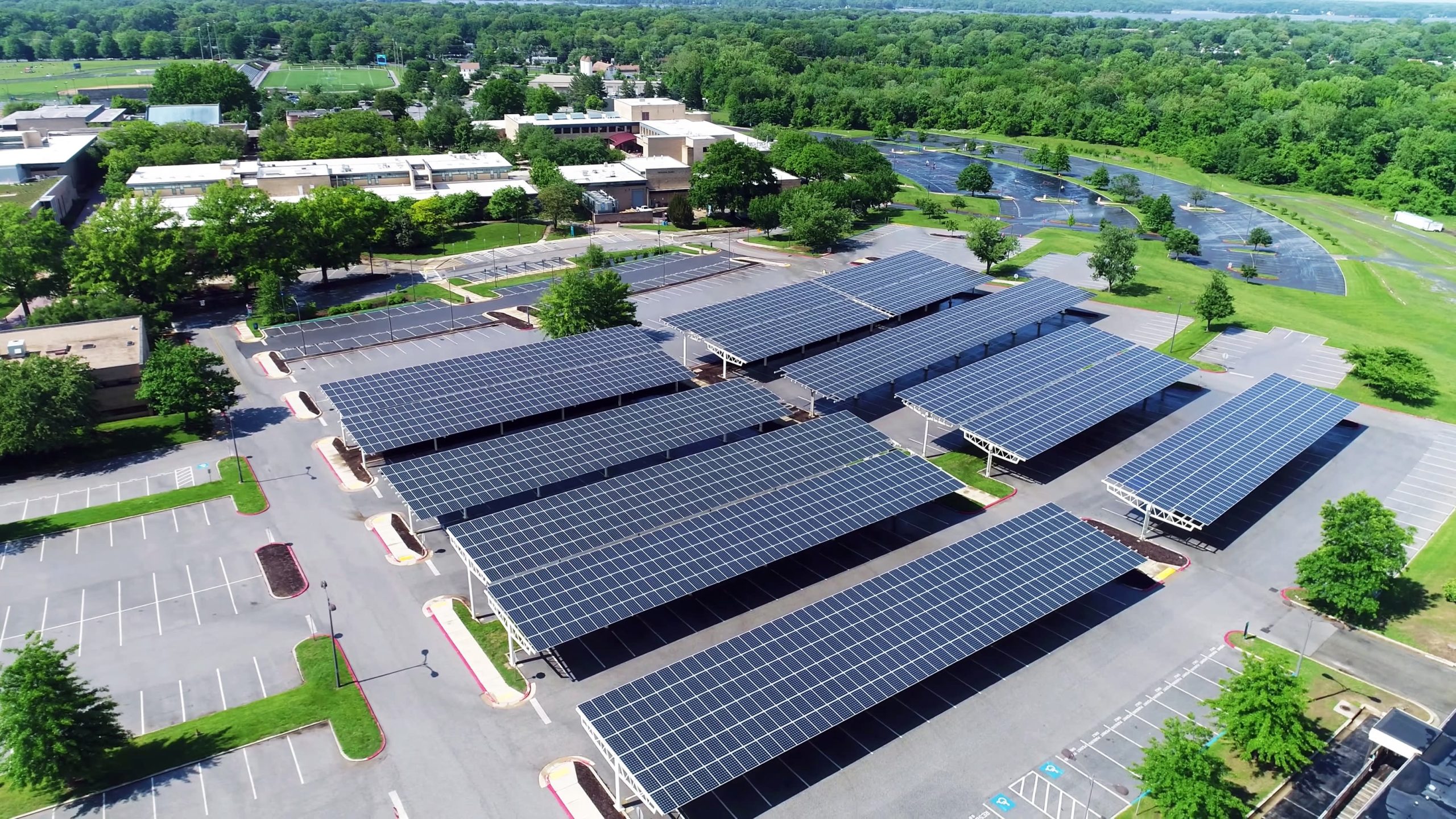
Solar-to-X
By Sergio Durante
“What if sunlight could do more than just generate electricity? What if photons could activate reactions, trigger sensors, or even speak to artificial intelligence?”
For decades, we’ve imagined artificial intelligence as something cold, alien, and disconnected from human intuition. But what if the real breakthrough isn’t replacing the human mind — but enhancing it?
For decades, solar energy has been synonymous with photovoltaics. We’ve celebrated every efficiency gain, every leap in module performance, every rooftop transformed.
But now, a more radical vision is emerging: using light not just as a source of energy, but as a functional signal. One that directly interacts with matter, materials, and intelligent systems.
⸻
1. The Shift: From Energy Harvesting to Photonic Activation
Traditional solar systems convert photons into electrons.
Our new line of research takes a different route: Photon-to-Function.
Instead of focusing solely on electric output, we are exploring how specific wavelengths of light can be used to modulate materials, control devices, and trigger embedded functions.
This opens the door to a future where solar exposure = behavior modulation.
Not just panels, but smart surfaces that adapt in real time.
⸻
2. Technologies at the Frontier
We are currently investigating advanced material and system architectures that enable:
• Functional coatings activated by sunlight
• Quantum-inspired interfaces where light affects state, not just energy
• Photonic modulation layers for real-time device adaptation
• AI-integrated control systems trained to “understand” solar dynamics
These systems operate in low-energy, high-efficiency states, reducing dependency on batteries or traditional electronics.
⸻
3. Solar Intelligence: When Light Becomes Logic
In our vision, light doesn’t just power — it informs.
We’re building systems where light becomes part of the feedback loop.
Imagine surfaces that adjust their transparency, conductivity, or structure based on solar input.
Imagine devices that optimize their configuration not just with code, but with photons.
The synergy with AI is crucial:
Through machine learning algorithms, systems learn to associate solar patterns with environmental changes, making them predictive, not reactive.
🌞 Light becomes the first language of smart materials.
⸻
4. Use Cases That Break the Mold
The potential applications go far beyond traditional PV:
• 🏙️ Architecture & façade design: adaptive solar skins for buildings
• 🚘 Autonomous vehicles: light-triggered cooling, structural adjustments
• 🚀 Aerospace: orbital materials that shift behavior based on solar radiation
• 🌾 Agritech: sunlight-activated membranes for controlled environment farming
• 📡 Sensing & defense: passive, solar-driven systems with no power source
Each use case integrates low-footprint intelligence — no motors, no wires, just light and structure.
⸻
5. A Platform, Not Just a Panel
We believe the next generation of solar technology is not a product — it’s an environment.
A solar platform capable of sensing, adapting, responding, and evolving.
This includes not just energy generation, but:
• Material modulation
• Information encoding
• Data transmission through light
• Cognitive response mechanisms
It’s an entirely new paradigm where sunlight becomes the interface between matter and intelligence.
⸻
6. Why It Matters (Now)
Climate targets require more than efficiency gains. They demand new thinking.
• Energy autonomy must be smarter, lighter, and more integrated.
• Future infrastructures must interact with their environment — not fight it.
• Systems must be able to react before they’re told.
Our work is driven by this vision: a post-photovoltaic future.
Where light doesn’t just power devices — it shapes their logic.
⸻
7. What’s Next
We’re co-developing this research with interdisciplinary partners in:
• Material science
• Optical physics
• AI engineering
• Advanced manufacturing
We’re building demonstrators. Simulating edge cases. Training the logic.
And most of all, we’re pushing the boundary of what “solar” really means.
☀️ The Sun is more than a battery. It’s a signal. A switch. A code.
We’re just learning to speak its language.


Self-Healing Materials
By Sergio Durante
“What if your car could heal its own scratches? What if aircraft panels could repair themselves after microdamage, reducing maintenance and improving sustainability?
We are exploring this future — and it’s much closer than it seems.”
For decades, we’ve imagined artificial intelligence as something cold, alien, and disconnected from human intuition. But what if the real breakthrough isn’t replacing the human mind — but enhancing it?
1. Rethinking Materials: From Passive Structures to Active Skins
For decades, materials in mobility and aerospace have been judged by strength, stiffness, and weight.
Today, a new generation of smart bio-nanocomposites is emerging — capable of adapting, reacting, and even healing under stress.
Our research focuses on self-healing surfaces and structural components designed for next-gen vehicles, both on Earth and in orbit.
These materials are not only lightweight and resistant, but they are capable of restoring microdamage, eliminating the need for repainting, reducing lifecycle waste, and extending component lifespan.
2. How It Works: Healing Without Human Intervention
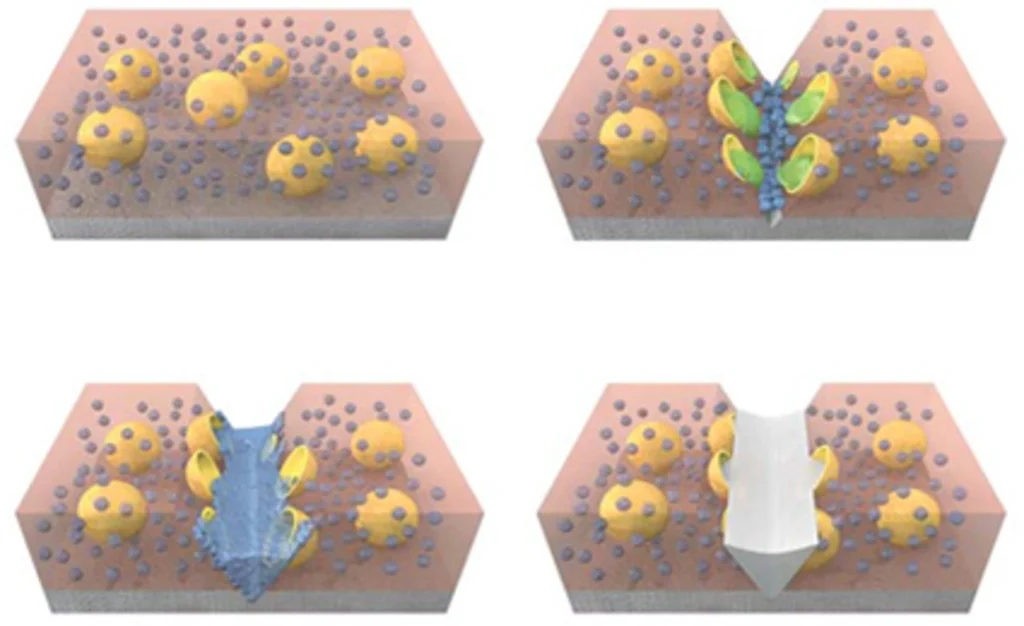
The self-healing process we’re studying is based on a bio-inspired mechanism:
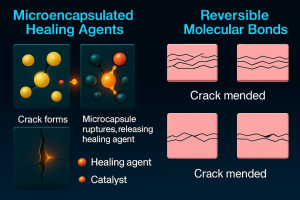
• When micro-cracks or scratches occur, embedded healing agents (like microcapsules or vascular channels) activate.
• Triggered by external factors (UV, temperature, pressure), the system releases repair compounds that reseal the damaged area.
• The result is a restored surface, both aesthetically and functionally, without external repair.
🧠 And it doesn’t stop there: the next generation will log damage and healing cycles, creating a live material twin accessible by diagnostics systems.
3. Goodbye Paint Shops, Hello Functional Surfaces
One of the most disruptive outcomes of this technology?
Eliminating the painting process for exterior vehicle parts.
We are developing glossy, paint-free, self-repairing outer skins, especially for automotive components like:
• Pillars and trims
• Bumpers and spoilers
• Aero-fairings and lightweight covers
No more VOC emissions. No costly rework. No aesthetic degradation over time.
These materials self-correct under thermal or UV activation, bringing the surface back to its pristine form.
4. Intelligence Inside: Digital Twins of Materials
We’re not just creating better materials — we’re creating materials with memory.
Each new composite we design is coupled with a digital model that simulates:
• Mechanical fatigue
• Environmental stress (e.g. salt spray, UV, ice)
• Impact resistance
• Healing cycles and durability over time
These simulations allow for real-time adaptation in design, AI-based optimization, and even predictive maintenance during use.
Our approach is fully integrated with Industry 4.0 and Digital Twin frameworks, pushing R&D and production into a new hybrid domain.

5. Applications: Where It All Begins
We are targeting real-world validation in sectors where weight, durability, and repairability are mission-critical:
• 🚗 Automotive: next-gen trims, EV platform components, interior decorative inserts
• 🛩️ Aerospace: fairings, paneling, satellite structural elements
• 🛰️ Space-grade materials: for micro-impacts and thermal cycling resilience
• 🚜 Heavy-duty / agricultural: rugged external parts that must endure weather and mechanical stress
Each prototype is co-developed with end-user feedback and stress-tested in accelerated degradation environments — from salt fog chambers to cryogenic swings.
6. Environmental Impact: Built to Heal, Born to Degrade
Sustainability is not a buzzword — it’s a specification.
Our materials are being designed with biodegradable or bio-origin polymers, enabling new circular pathways:
• ♻️ Post-use recycling or safe degradation
• 🧪 Compatibility with low-energy manufacturing
• 🌿 Alignment with new EU sustainability benchmarks (Green Deal, REACH, etc.)
By removing painting, extending part life, and reducing waste, this technology directly contributes to zero-emission and zero-waste goals in the mobility supply chain.
7. What’s Next: Integrating Intelligence and Matter
This is just the beginning.
We are already exploring next-generation self-healing composites with:
• Embedded sensors for structural health monitoring
• Adaptive surfaces that change texture or friction on demand
• AI-driven repair optimization based on real-world data
These aren’t just materials.
They’re systems that think, feel, and respond — creating a new paradigm in mobility design and maintenance.
🧠 We are not just building parts. We’re building matter that remembers.